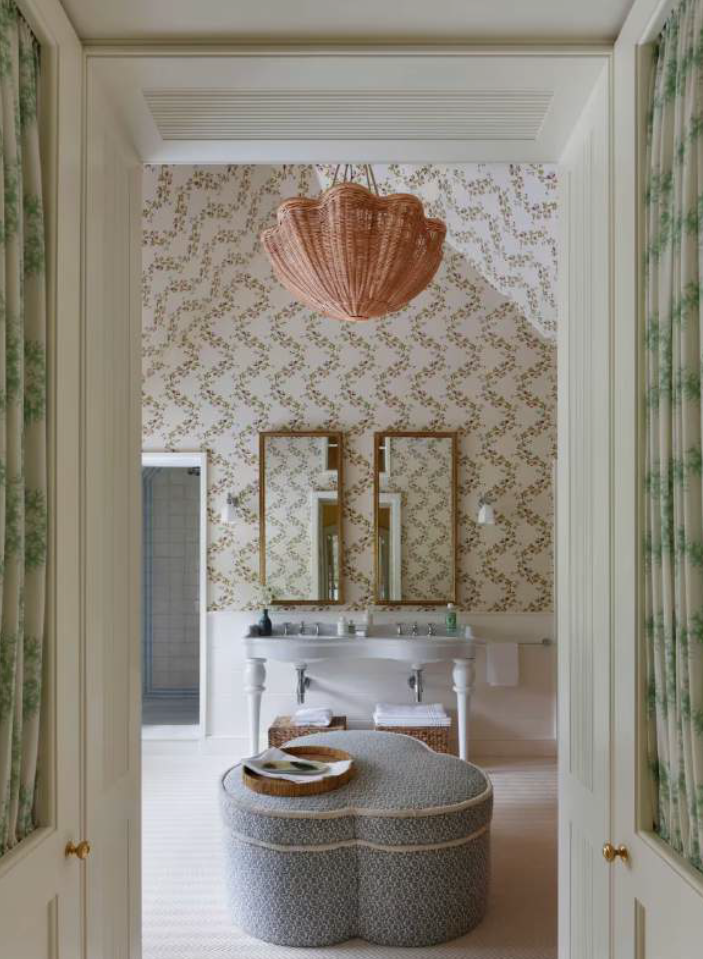
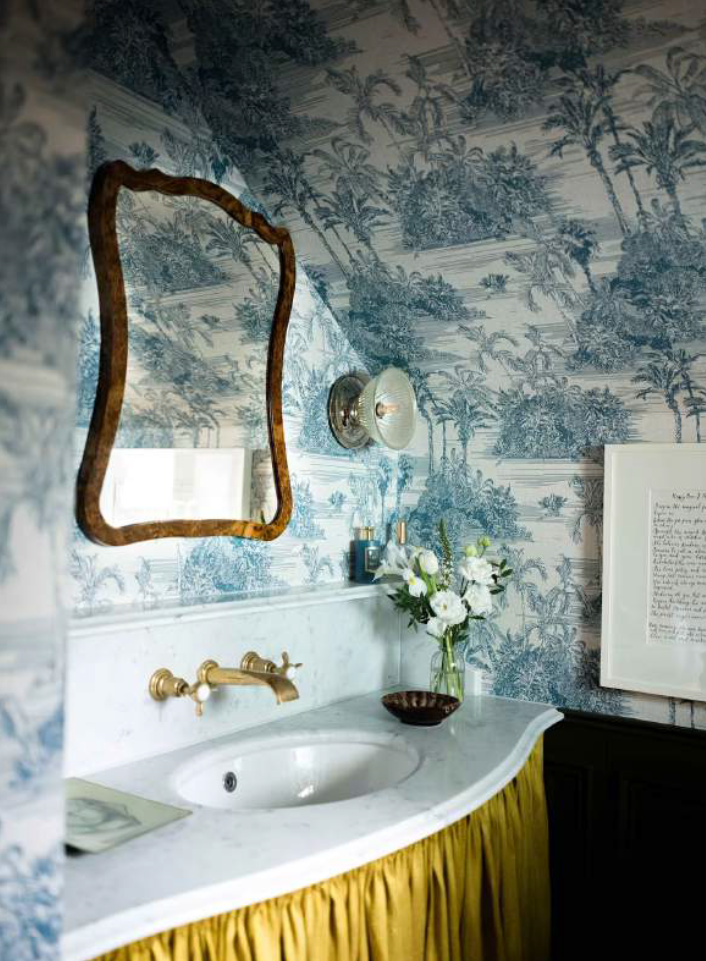
However many fluffy towels and chichi candles you pile in, the modern bathroom has a tendency to veer towards the hard and clinical rather than the cosseting. But some designers are flipping the dial back to a more retro vibe and treating the space like a sitting room or cosy retreat. Think ruffled, fringeembellished curtains, deep carpets, squashy armchairs or ottomans and floral wallpaper.
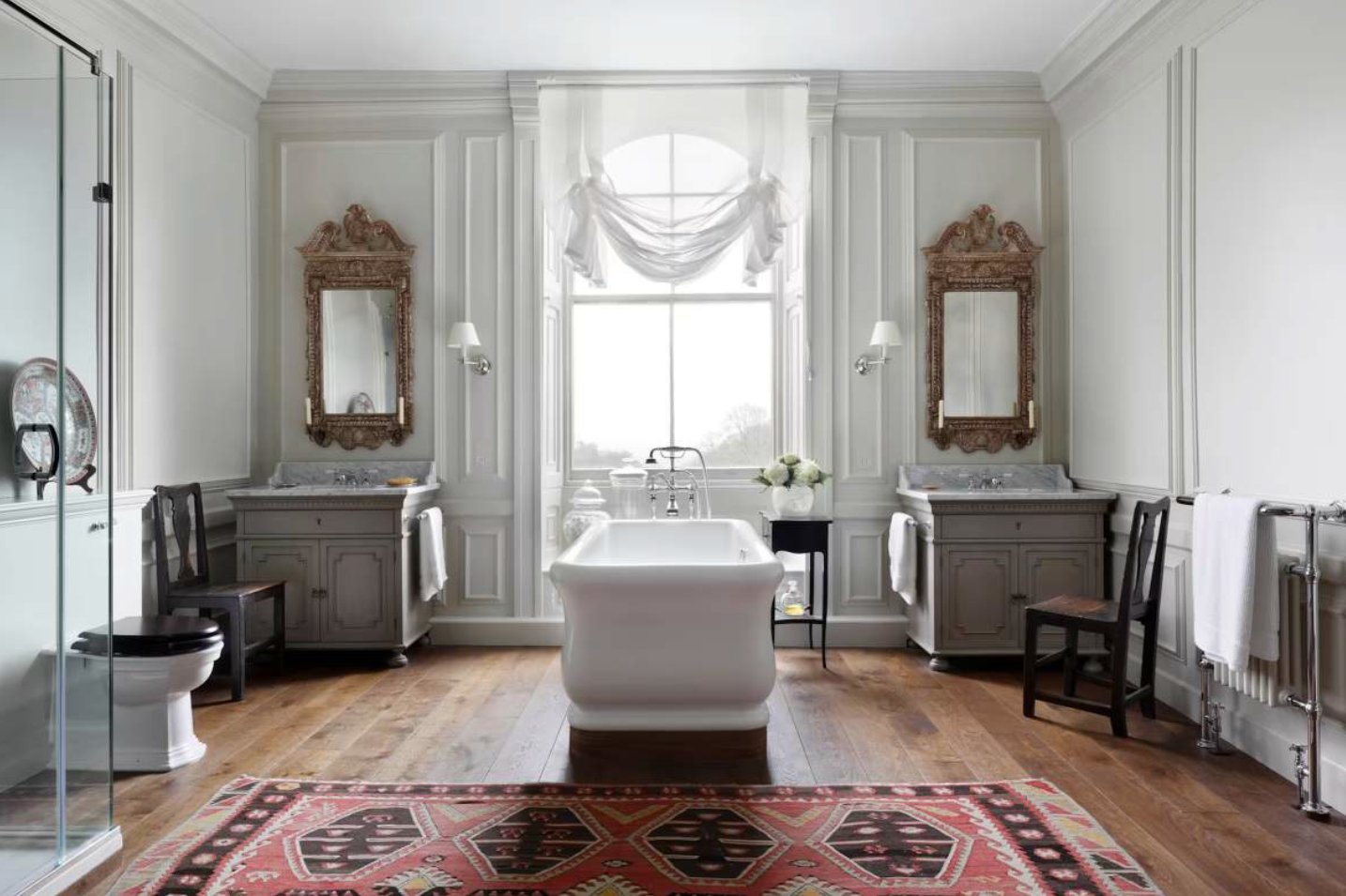
“Why can’t a bathroom be charming?” says interior designer Henriette von Stockhausen. Who wants “stark and echoing”? Her Dorset-based studio VSP Interiors specialises in historic country homes and often brings antique furniture into the bathrooms, sometimes repurposing it as vanity units. In a home in a West Berkshire village, contrasting painted cornicing, floor-grazing drapery and braided trim soften the mood. “I’ve always preferred curtains and paintings, wooden floors, a fireplace. A proper room.”
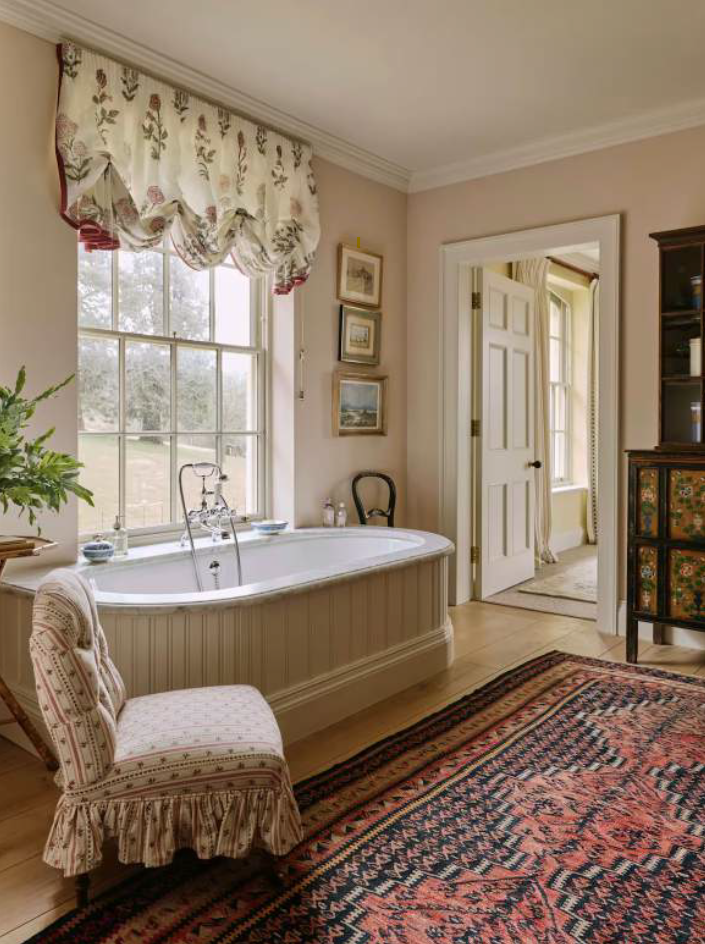
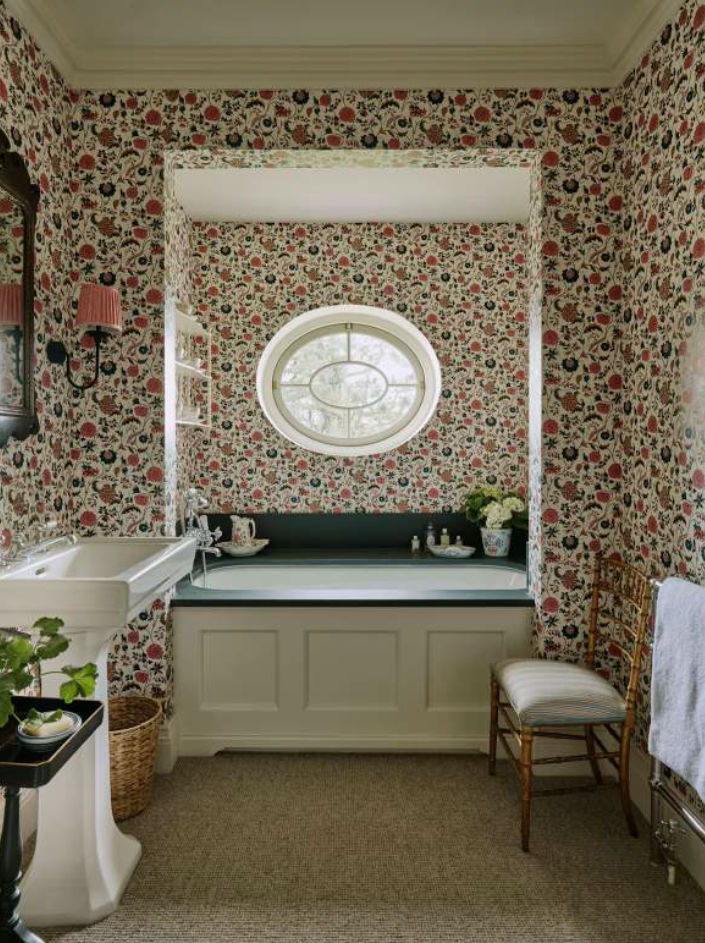
In her antique-filled projects across the UK, Octavia Dickinson often opts for “blowsy” ruched Austrian blinds in the bathroom, or a skirted slipper chair for tub-side chats. “I love a sociable bathroom,” she says. She has lined the sides of baths with gathered fabric panels and, if the clients can be persuaded, will always opt for a woollen carpet. “It is divisive — but I can’t think of anything nicer.” Von Stockhausen’s tactic might be more palatable to the hard-surfaced, hygiene-focused: layering Persian rugs on wooden floors.
The bathroom should be a space to linger in, says antiques dealer and designer Max Rollitt; a space to be enjoyed. He likes to start with the art — the bathroom “is one of the few places where you can spend time appreciating it”, he says. In a coastal villa in Hampshire, he installed a picture rail “for an everchanging display”. His dream scheme offsets “the hard with the soft”: a cushioning, upholstered window seat, a claw-foot tub decorated with an azure stripe and floorboards painted with a chequerboard pattern to mimic tiles. The glare of a glass shower screen is not for Rollitt; he prefers the shower to be hidden away (like the toilet) behind a partition wall.
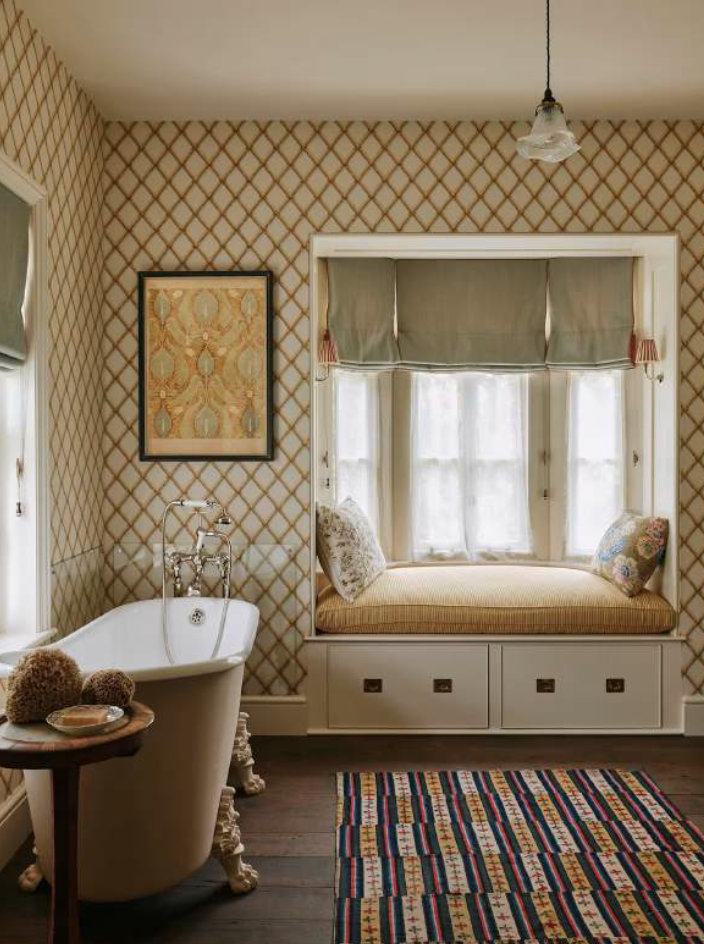
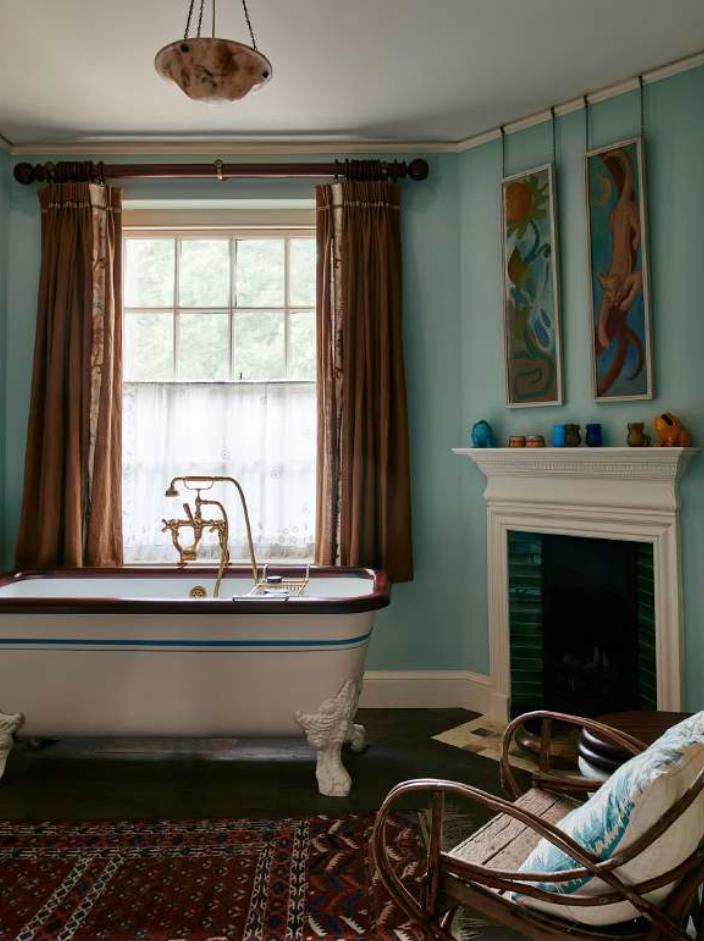
“We’ve become so preoccupied with architectural finishes, everything being waterproof, that bathrooms can feel like a sterile afterthought,” says Sarah Peake. She suggests turning antique mirrors into cabinet fronts and adding wall panelling to more compact rooms. For robust wood flooring, she recommends Schotten & Hansen, while adding a gathered fabric shade to lighting will create a flattering glow (try Porta Romana or Fritz Fryer). Former set designer Tiffany Duggan encourages clients to “embrace softer layers” with valance basins.
It’s sublimely flouncy. These tend to be schemes where abundant space allows for a more laissez-faire attitude to spills, splashes — and condensation, the enemy of soft furnishings.
The shower curtain is enjoying a renaissance: think floor-sweeping linens or cottons. Marta de la Rica hangs them on circular rails for a jaunty bell tent effect.
And it’s not all about the vast bathroom; a lack of square footage need not preclude creativity, says Emma Burns, of Sibyl Colefax & John Fowler. In her first flat, in west London, “I painted the walls deep brown and hung lots of paintings,” she says. From photos “you’d never have known it was a tiny, windowless bathroom”. She also persuaded a client to put their Bridget Riley above the loo. “Why shouldn’t art be for your private delectation only?”